

Sinigang is the ultimate comfort food! This classic Filipino soup is distinguished by its sour and savoury medly of flavours. Popular in the Philippines, it is served with steamed rice or on its own.
Similar to Filipino adobo, sinigang has many variations. For its protein, it can be fish, shrimp, chicken, and pork. While for the souring agent, tamarind is the most popular, but guava, green mango, calamansi, kamias, batuan, santol, and other native fruits are alternatives.
Personally, I prefer tamarind since it is well-known to improve digestion by addressing both constipation and diarrhea. It has also been known to treat problems with the liver, gallbladder, stomach disorders and aid weightloss since it controls sugar levels (Bhadoriya et al., 2011). Further more, it contains anti-inflammatory properties to boost the immune system, aid wound-healing, treat cell cytotoxicity, and protection from the common microbial and fungal infections (Komakech et al., 2019). These are just a few of its many benefits so I recommend reviewing the references below or exploring the internet.
For now, made with pork ribs or fish, vegetables, and tamarind-flavored broth, it’s hearty and delicious on its own or served with steamed rice.
Ingredients
- 3 cloves of garlic
- 1 bunch of spring onion
- 1 thumb of ginger
- 2-3 tomatoes (kamatis)
- 1 bunch of string beans
- 6-8 pieces of okra
- 1 bunch of water spinach (kang kong)
- 1 chili
- Tamarind
- Salt, for taste
For non-vegetarian option: add meat, which can be fish, shrimp, chicken, and pork. For chicken and pork, use with bone for a savoury, rich broth.
Note: If you decide to use meat, then boil the water and add the meat followed by all the vegetables listed.

Method
Step 1: Wash ingredients and drip dry
Step 2: Peel and dice your garlic and slice
Step 3: Cut roots off the kang kong and separate into three sections
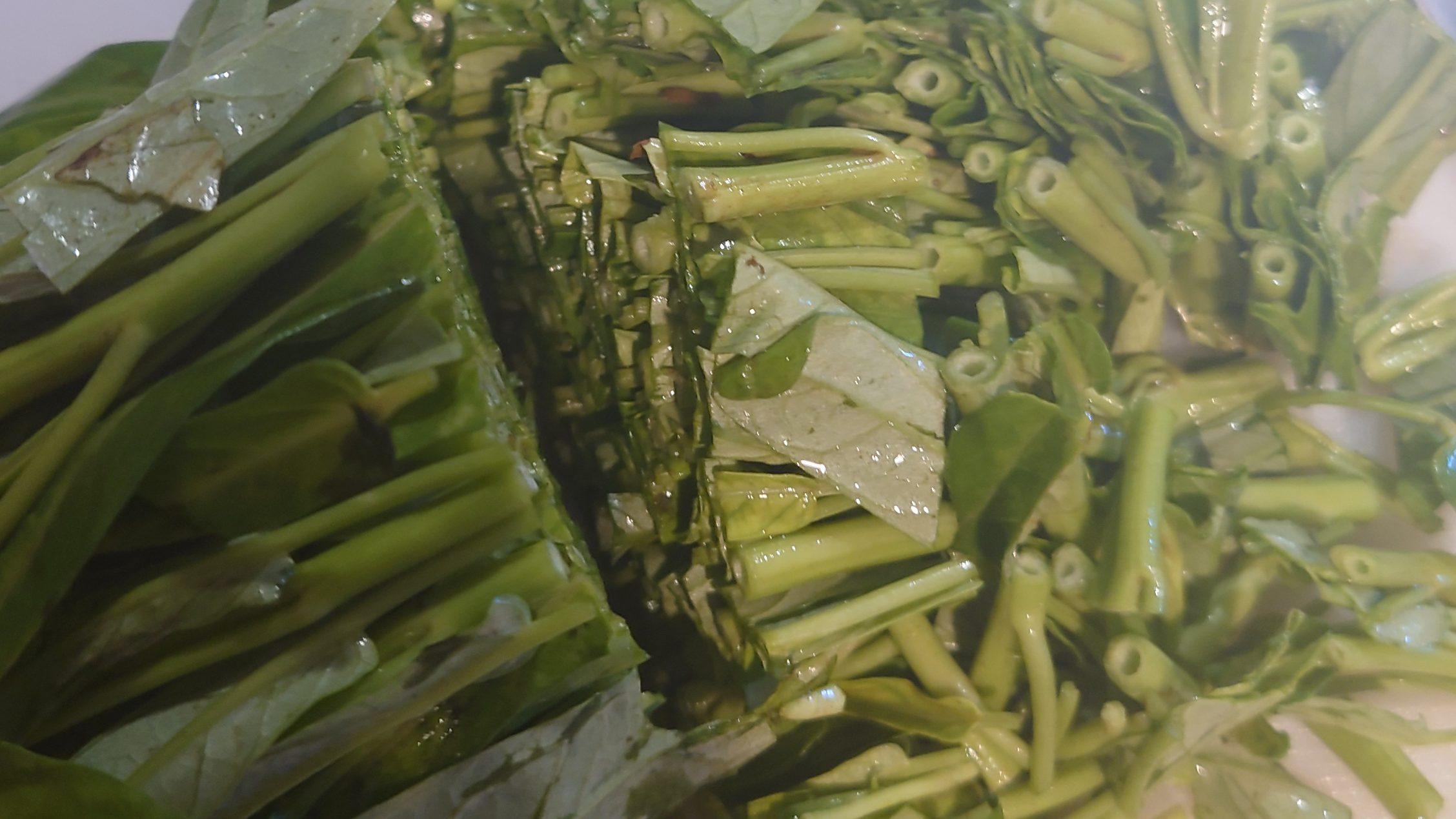
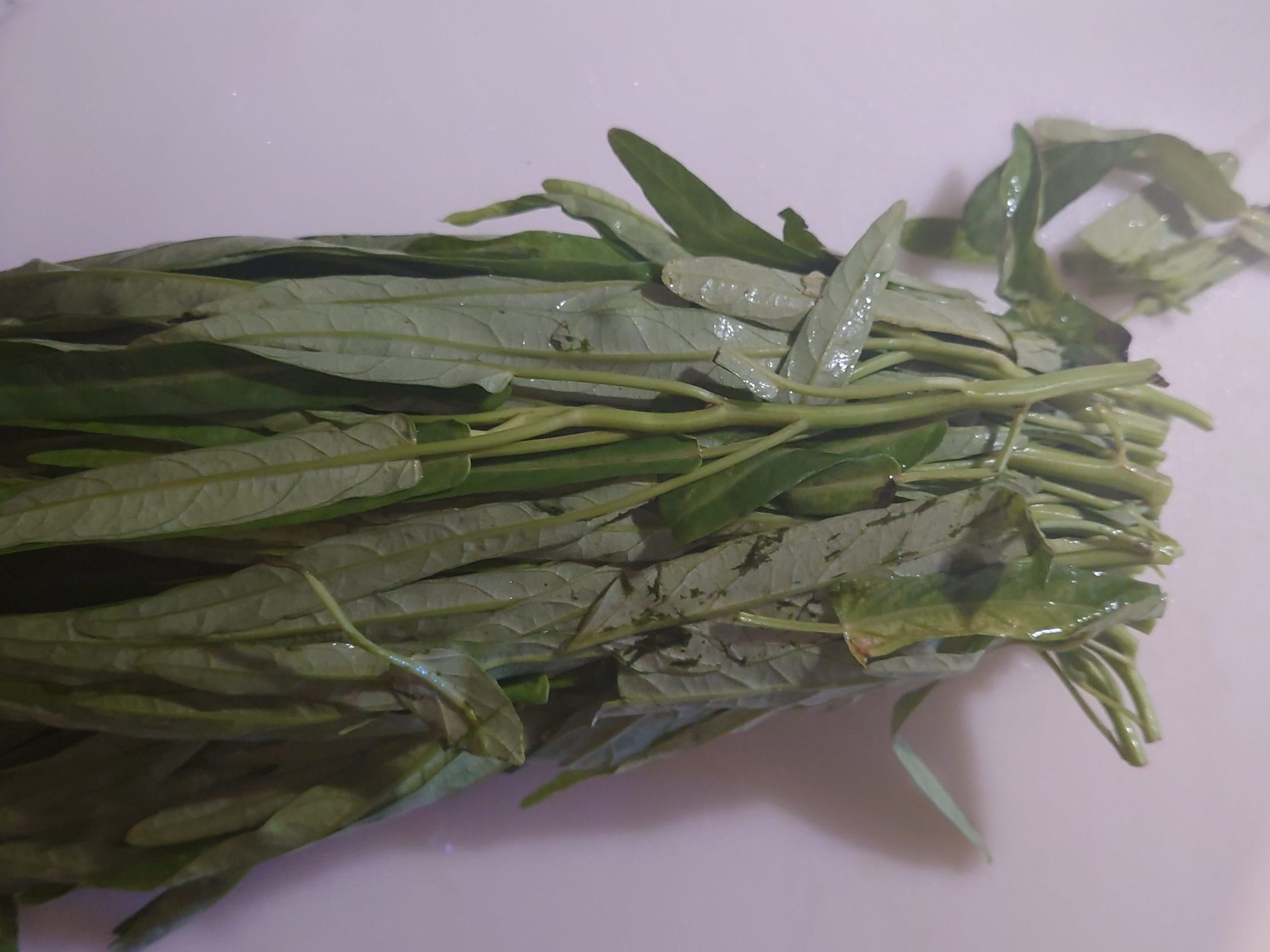
Step 4: Cut spring onions horizontally as shown on the left and slice string beans horizontally into strips as shown on the right

Step 5: Cut tomato into four parts then slice into halves as shown below. This allows bite size pieces.

Step 6: Cut okra as shown below but beware of the slime. Therefore, it should be the last vegetable cut.


Step 7: Boil water. Wait for it to come to a simmer then add garlic and string beans.
If you decide to use meat, then meat before beans. For chicken and pork, use meat with bones and boil for 30 minutes. If fish and shrimp, boil for 10 minutes.

Step 8: Once 2 minutes have passed, add kang kong then slowly add more water.

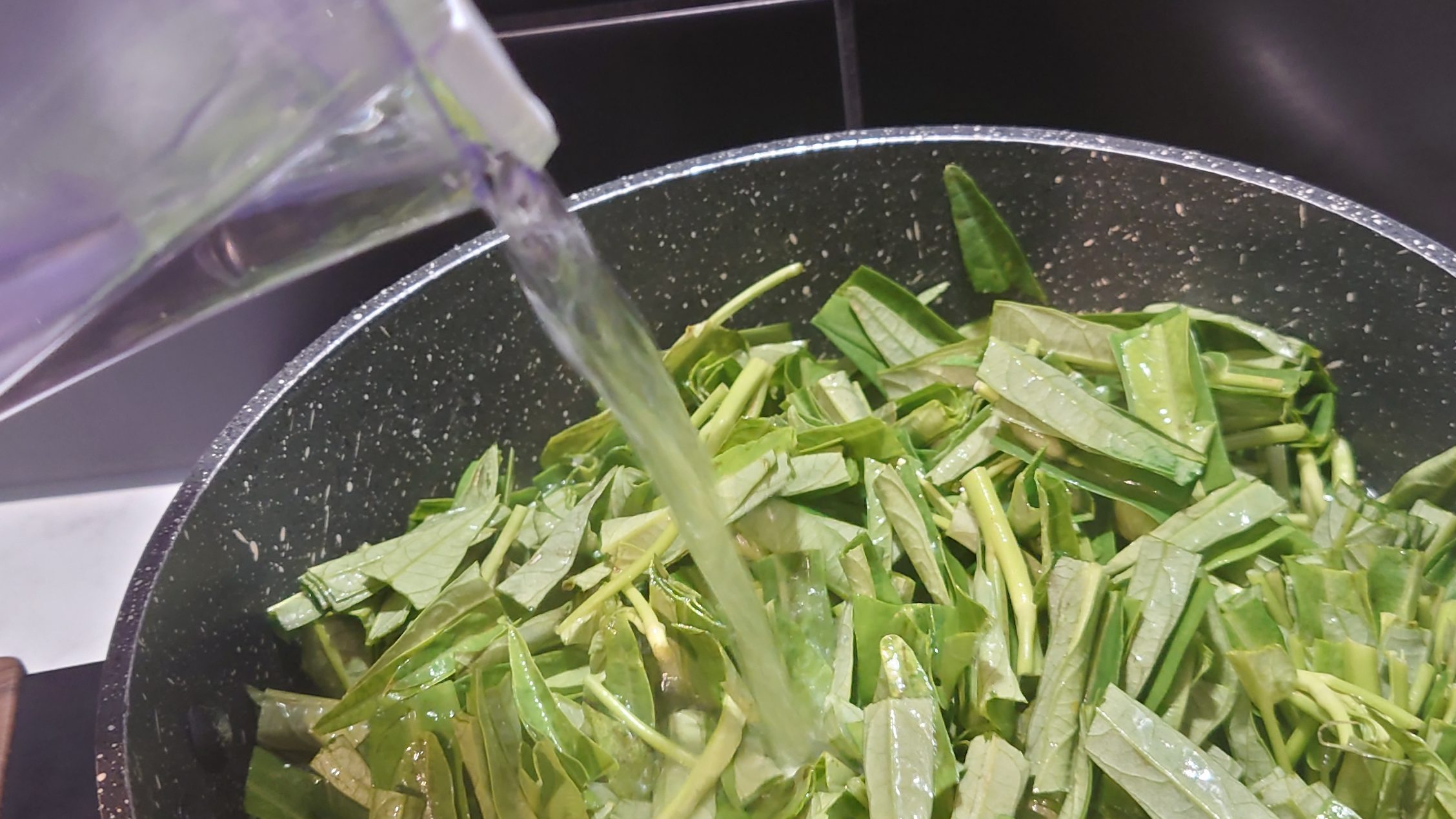
Step 9: Once simmers, add tomatoes.

Step 10: Add the okra, tamarind, salt and if preferred, chilli.


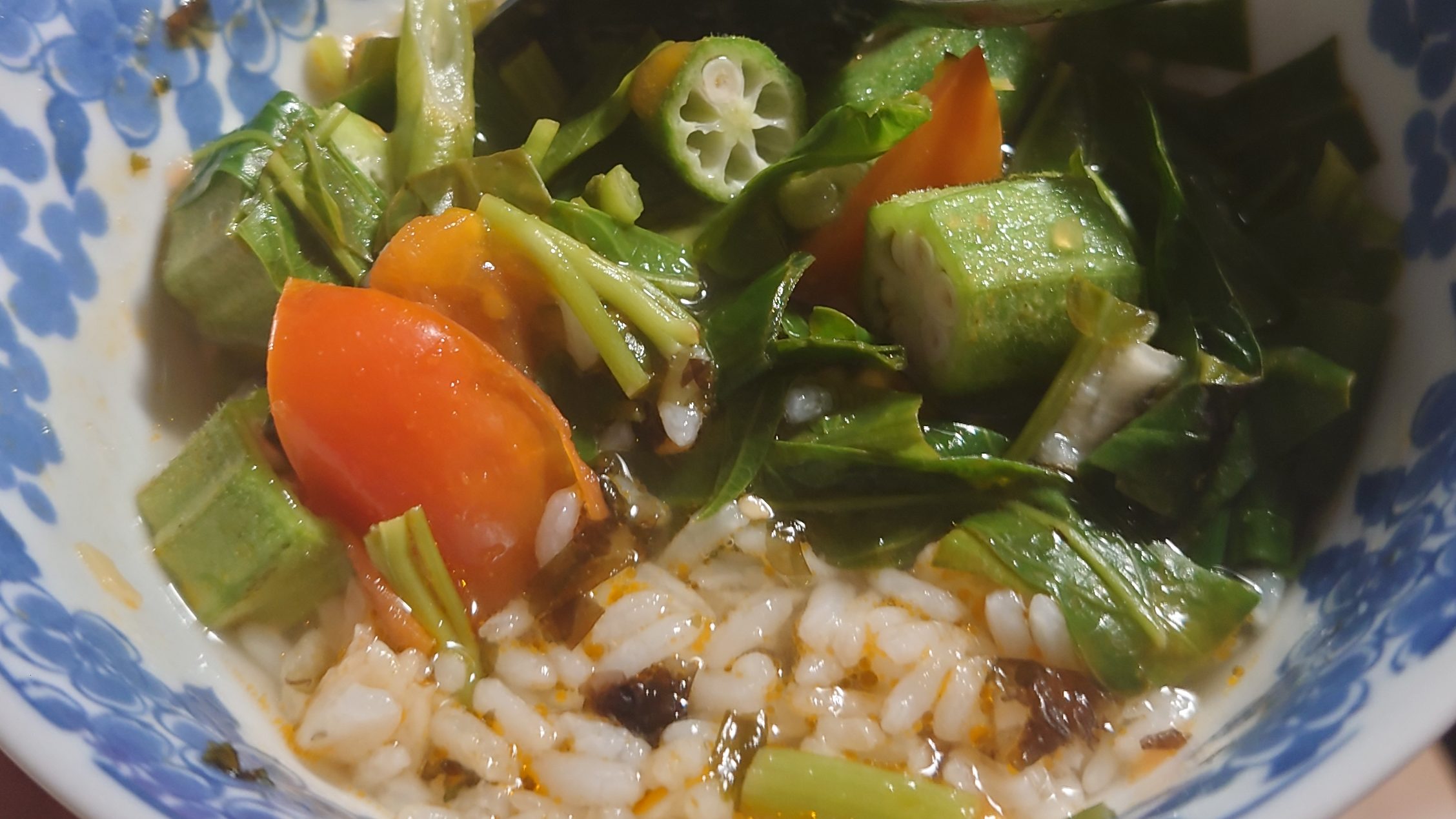
Step 11: Serve over rice.
References
Bhadoriya, S. S., Ganeshpurkar, A., Narwaria, J., Rai, G., & Jain, A. P. (2011). Tamarindus indica: Extent of explored potential. Pharmacognosy reviews, 5(9), 73–81. https://doi.org/10.4103/0973-7847.79102
Komakech, R., Kim, Y. G., Matsabisa, G. M., & Kang, Y. (2019). Anti-inflammatory and analgesic potential of Tamarindus indica Linn. (Fabaceae): a narrative review. Integrative medicine research, 8(3), 181–186. https://doi.org/10.1016/j.imr.2019.07.002
 Artist & Academic